 Skip to content

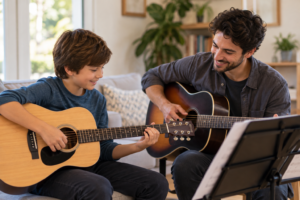


Getting a child to practice music consistently is one of the biggest challenges families face after starting lessons. It is not usually a motivation problem—it is a structure problem. Without a clear routine, practice becomes inconsistent, rushed, or skipped altogether.
Families who start music lessons in San Diego often ask the same question: how do we make practice part of our weekly rhythm without turning it into a daily battle? The answer is simpler than most people expect.
Start with a realistic schedule
The biggest mistake parents make is aiming for too much too soon. A 10–15 minute focused session is far more effective than a long, inconsistent practice block.
Instead of forcing daily practice right away, start with 3–4 days per week and build from there. Consistency matters more than duration, especially in the early stages.
This is something we emphasize in our piano lessons and beginner programs, where small wins each week lead to steady progress.
Make practice part of the routine, not a separate event
Practice works best when it is tied to something that already happens every day. For example, practicing right after school or before dinner creates a natural habit loop.
In busy cities like San Diego, where families are balancing school, activities, and commuting, this kind of structure makes a big difference. Instead of squeezing practice into leftover time, it becomes part of the normal flow of the day.
For families in areas like North Park or near local schools, keeping everything at home often makes routines easier to maintain.
Keep sessions focused and specific
One of the reasons kids resist practice is because they do not know what to do. “Go practice” is too vague.
A better approach is breaking practice into simple steps:
- Warm-up (scales or basics)
- Work on one challenging section
- Play something they enjoy
This structure keeps sessions productive without feeling overwhelming. It is also a core part of how our in-home lessons work, where teachers guide students on exactly what to focus on between lessons.
Remove friction wherever possible
The easier it is to start, the more likely practice will happen. That means having the instrument accessible, materials ready, and no extra setup required.
This is one reason many families prefer in-home lessons. Without the need to travel, the entire learning process—from lesson to practice—stays in the same environment.
That consistency helps reinforce habits and makes it easier for students to follow through during the week.
Set clear expectations (but keep it positive)
Children respond best when expectations are clear but not overwhelming. Instead of pushing for perfection, focus on effort and improvement.
Even small progress deserves recognition. Over time, those small wins build confidence and make practice feel rewarding instead of frustrating.
Final thoughts
A strong music practice routine does not need to be complicated. It just needs to be consistent, realistic, and structured in a way that fits your family’s schedule.
We work with families to make sure lessons and practice feel manageable, not stressful. If you are looking for in-home music lessons in San Diego, you can also book your first lesson at 50% off and get guidance on building a routine that actually works.