 Skip to content


Music lessons in Raleigh become more meaningful when children can connect the notes they practice at home with musicians they see and hear in real life. A concert does not need to be a major family outing to make an impression. Sometimes hearing a violin, piano, or guitar up close is enough to make a child curious about what comes next.
If your child is just starting out, here are a few Raleigh places and simple ways to use live music to support their progress without adding pressure.
Why Live Music Helps Kids Stick With Music Lessons in Raleigh
At home, beginning students spend time on small skills: steady rhythm, clean notes, short melodies, and repeating tricky passages. That work can feel disconnected from the music they love. Watching musicians perform helps put those building blocks into context.
Children also notice things adults might overlook. They see how performers listen to each other, recover after mistakes, and stay focused. A student may leave a performance wanting to learn a particular instrument or song. That kind of curiosity can be more useful than another reminder to practice.
For families considering Raleigh music lessons, the goal is not to attend concerts constantly. It is to help a child understand that learning music is something they can enjoy, share, and keep growing into.
Hear an Orchestra at Meymandi Concert Hall
Meymandi Concert Hall at the Martin Marietta Center for the Performing Arts in downtown Raleigh is home to the North Carolina Symphony. An orchestral performance offers a clear look at how many different instruments can work together to create one sound.
Before you go, let your child choose one instrument to listen for. During the performance, see if they can recognize when it carries the melody or plays a supporting part. Afterward, ask which sound surprised them most. That is plenty of musical learning for one evening.
Check the Symphony’s current calendar for performances and any programs intended for younger audiences. Not every concert will be the right fit for a small child, and attention spans matter more than trying to sit through a full program.
Try Outdoor Performances at the North Carolina Museum of Art
The North Carolina Museum of Art, west of downtown Raleigh, has an outdoor amphitheater and hosts performances and events as part of its programming. When an appropriate concert is scheduled, an outdoor setting can be an appealing introduction for families who are not sure their child is ready for a formal concert hall.
A relaxed setting can make it easier to talk before and after the music about the instruments, rhythm, and mood of what you heard. Look at the event details first, including age guidance, ticket requirements, and whether the performance suits your child’s interests.
You do not have to turn the evening into a lesson. Let the child enjoy it, then bring up one favorite moment during the next practice session.
Explore Raleigh’s Music Scene Beyond the Concert Hall
Raleigh also has larger performance spaces, including Red Hat Amphitheater downtown, where families can look for concerts that match an older student’s interests. A teenager learning guitar may be more inspired by a favorite band than by an orchestral program, and that is completely fine.
If you live around Five Points or nearby neighborhoods, you may already be balancing school activities and after-school commitments. Choose an event that fits the family’s schedule instead of making music feel like one more obligation.
For younger children, even a short, age-appropriate performance can be enough. The important part is letting them see music as something people make together, not only something they complete on a practice checklist.
Bring the Inspiration Back to Practice at Home
After a performance, ask a question your child can answer easily: Which instrument would you want to try? Was there a fast part or a slow part you liked? Did the musicians seem to be listening to one another? Avoid turning the conversation into a quiz.
Then tell your child’s teacher what caught their attention. A piano student who loved a dramatic melody might be ready for a simplified piece with a similar feeling. A beginner guitarist who noticed strumming patterns might enjoy working on rhythm in a favorite song.
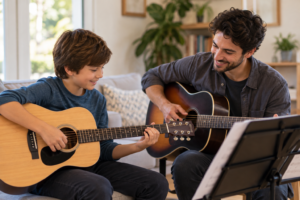
Our piano lessons and guitar lessons can be shaped around students’ interests while still developing technique, listening, and steady practice habits. When a child sees a connection between what they enjoy and what they are learning, practice has a clearer purpose.
With in-home music lessons, the teacher can also work with the instrument and practice space your child uses between sessions. That makes it easier to turn a burst of inspiration into a manageable weekly goal.
A Quick Checklist for a Kid-Friendly Music Outing
Before buying tickets, consider a few practical questions:
- Is the music likely to interest my child right now?
- Is the performance length reasonable for their age?
- Are there any age restrictions, seating rules, or sound-level concerns?
- Can we listen to a short sample together beforehand?
- Is there one simple thing my child can share with their teacher afterward?
Ready to Start Music Lessons in Raleigh?
Live music can spark interest, but steady progress usually happens through patient instruction and manageable practice between lessons. You do not need to visit every venue in Raleigh to help a child grow as a musician. One meaningful experience and a teacher who follows up on that interest can go a long way.
In Home Music Mentor offers personalized music lessons in Raleigh that fit into family life. If your child is curious about piano, guitar, or another instrument, book a first lesson at 50% off and begin with an approach that makes music feel relevant to them.