 Skip to content



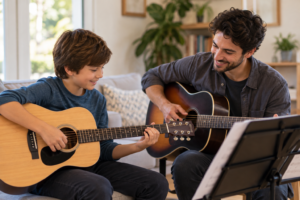

Piano lessons in Salt Lake City should fit your child’s learning style and your family’s schedule. Choosing between in-home and studio instruction is not just about finding a talented teacher. Parents also need to decide whether lessons should happen in a studio or at home, and that choice affects the entire week.
If you are exploring music lessons for Salt Lake City families, both formats can help children learn. The right one depends on your child’s attention, the instrument they use to practice, and how easily lessons fit between school, homework, and family activities.
What Is Different About In-Home and Studio Piano Lessons?
In a studio, your child travels to a dedicated teaching space. That setting can feel focused and exciting, especially for a student who likes having a separate place for music. Some studios also provide access to an acoustic piano or opportunities to meet other students.
With in-home lessons, the teacher comes to your family’s piano or keyboard. Your child learns in the same space where practice happens during the rest of the week. There is no weekly drive to the lesson, and the teacher can see how the instrument is set up at home.
Neither format automatically produces better results. Consistent instruction and manageable practice matter more than the address of the lesson.
Salt Lake City Families Should Count the Whole Commute
A 30-minute lesson can take considerably longer when travel, parking, and waiting are included. Families in Sugar House or Highland Park may already be juggling pickup times, activities, and evening routines. Even a short extra drive can make a school night feel crowded.
Sugar House Park, a 109-acre neighborhood landmark, is a familiar reminder of how much family life happens outside school hours: playground time, sports, and other activities all compete for space on the calendar. A lesson schedule should work with those commitments rather than constantly displacing them.
If the studio is close to home and the trip is easy, it may be a great option. If the commute makes lessons hard to maintain, in-home music lessons can protect that time for practice, dinner, or simply a calmer evening.
Learning on Your Own Piano Can Make Practice Easier
A child may play confidently on the studio piano, then struggle at home because the keyboard feels different or the bench sits at an awkward height. Small details matter to beginners, including posture, lighting, where sheet music sits, and whether the instrument is easy to reach.
When a teacher visits the home, they can make suggestions using the actual setup. They can also show a parent how to support a short practice session without turning the parent into a second piano teacher.
Our piano lessons focus on skills that students can repeat between meetings: a manageable passage, a steady rhythm, or a specific hand-position adjustment. Clear goals are more useful than a vague instruction to practice longer.
When a Studio Might Be the Better Choice
Some children concentrate better outside the home. A studio may offer a useful change of scenery for a student who gets distracted by siblings, pets, or nearby screens. It may also be practical for families who do not yet have a suitable keyboard or piano.
Ask what instrument the teacher uses, whether students have opportunities to perform, and how practice assignments translate to the instrument at home. A studio’s extras are valuable only if they match your child’s interests and your family’s routine.
If your child is nervous about playing in front of others, ask whether recitals are optional and how beginners are prepared. Performance should build confidence rather than become an immediate source of pressure.
Salt Lake City Has Music Experiences Beyond the Lesson
Local performances can give a beginning pianist a reason to keep going. Downtown, Maurice Abravanel Hall was built as the Utah Symphony’s home in 1979. A family concert or suitable orchestral program can help a child hear how melody, rhythm, and listening come together onstage.
The historic Capitol Theatre, which opened in 1913 as the Orpheum Theatre, is home to Ballet West and Utah Opera. Its productions offer another way to experience live musicianship and see how music supports storytelling and movement.
You do not need to attend every concert. Choose an age-appropriate performance, listen to a short sample beforehand, and ask your child what they noticed afterward. That conversation may give their teacher a new song or skill to build on.
A Quick Checklist Before Choosing a Lesson Format
Before committing, ask these questions:
- Can we keep the same weekly lesson time during busy school months?
- Does my child focus better at home or in a separate space?
- Will the teacher help us set realistic practice goals?
- Is our home instrument suitable for beginner lessons?
- How will the teacher respond when my child gets frustrated?
- Are any recitals or group activities appropriate for my child’s age?
A teacher who can answer clearly and adjust to your child’s needs is often more important than the lesson format alone.
Ready to Start Piano Lessons in Salt Lake City?
The best piano lessons in Salt Lake City are the ones your family can attend consistently and your child can practice for without a nightly struggle. A convenient schedule, a supportive teacher, and clear goals make a stronger foundation than choosing a format based on appearances alone.
In Home Music Mentor offers personalized Salt Lake City music lessons in the comfort of home. If you would like to see whether this approach suits your child, book a first lesson at 50% off and start with a plan that fits your family’s routine.