 Skip to content



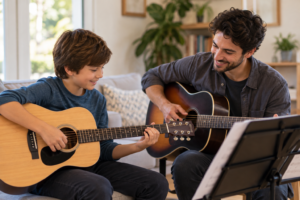

Guitar lessons in Bellevue can help children develop musical skills, build confidence, and discover the excitement of playing their favorite songs. But while weekly lessons provide important guidance, much of a student’s progress happens during the days between lessons.
For many parents, getting their child to practice consistently is one of the biggest challenges. A child may enjoy learning guitar with their teacher but struggle to pick up the instrument independently during the week.
The good news is that successful guitar practice does not require long sessions or strict schedules. With a manageable routine, clear goals, and encouragement, children can make meaningful progress without turning practice into a daily struggle.
If your family is exploring guitar lessons in Bellevue, these practical tips can help your child develop better practice habits while keeping music enjoyable.
Start With a Simple Guitar Practice Routine
One of the most common mistakes parents make is expecting beginners to practice for too long. Young students are still developing finger strength, coordination, and the ability to concentrate on unfamiliar musical skills.
For a child who has recently started guitar lessons, ten to fifteen minutes of focused practice can be a productive starting point.
Choose a consistent time during the day when your child is relatively relaxed. Some children prefer practicing after an afternoon snack, while others do better before dinner.
For Bellevue families living around Crossroads, where school schedules and activities at Crossroads Park or the community center can fill the afternoon, finding a realistic practice window is especially important.
The goal is not to create a perfect schedule. It is to establish a routine that your child can repeat throughout the week.
Make the Guitar Easy to Access at Home
Sometimes the biggest obstacle to practicing is simply getting started.
If the guitar is stored in a case inside a closet, a child may need help finding the instrument, setting it up, and locating their music before practicing.
Keeping the guitar safely accessible on a stand can make spontaneous practice more likely. A comfortable chair, good lighting, and a nearby music stand can also help create an inviting learning environment.
One advantage of in-home music lessons is that the teacher can evaluate the student’s actual practice space.
They can help families identify whether the guitar is the right size, whether the seating position is comfortable, and whether the practice environment supports good technique.
These small adjustments can make a noticeable difference in how confidently children approach their instruments.
Give Your Child Clear Practice Goals
Simply telling a child to “practice guitar” can feel overwhelming because they may not know exactly what to work on.
Instead, break practice into small, specific tasks.
For example, a beginner might spend a few minutes reviewing two chords, practicing a simple strumming pattern, and playing a short melody from their lesson.
A helpful practice session might look like this:
- 2 minutes reviewing the previous lesson.
- 4 minutes practicing chord changes slowly.
- 4 minutes working on a rhythm or strumming pattern.
- 5 minutes playing a familiar song or favorite musical exercise.
This approach gives children a clear beginning and ending while helping them recognize progress.
Our guitar lesson program focuses on developing foundational skills while allowing students to explore music that matches their interests.
When children understand how an exercise connects to a song they want to play, they often have a stronger reason to practice.
Encourage Progress Without Adding Pressure
Parents play an important role in supporting music practice, but they do not need to become guitar instructors themselves.
Instead of correcting every mistake, focus on helping your child maintain the routine and recognize improvements.
Ask questions such as “What did you learn today?” or “Can you show me the chord you’ve been practicing?”
These conversations allow children to share their progress without feeling that every practice session is a test.
It also helps to recognize specific improvements. For example, you might notice that your child changed chords more smoothly or kept a steadier rhythm than the previous week.
If your child becomes frustrated, encourage them to slow down and work on one small section at a time. Difficult passages are a normal part of learning an instrument.
Find Musical Inspiration Around Bellevue
Children sometimes struggle to understand why regular practice matters, especially when they are working through repetitive beginner exercises.
Seeing other young musicians perform can help connect those exercises to a larger goal.
The Bellevue Youth Symphony Orchestra provides opportunities for young musicians to develop their skills through ensemble performances. Its concerts at Meydenbauer Center Theatre offer families a chance to see students performing together.
Although a guitar student may not be learning an orchestral instrument, watching young performers demonstrate timing, listening, and coordination can still be inspiring.
Families around Crossroads and Stevenson Elementary can also look for local community performances and school music events that fit their schedules.
After attending a performance, ask your child what they enjoyed most. They might notice a particular instrument, rhythm, or melody that sparks a new interest.
Sharing those interests with their guitar teacher can help make future lessons more engaging.
What Should You Do When Your Child Doesn’t Want to Practice?
Even enthusiastic students have days when they would rather play outside, watch a show, or spend time with friends.
Occasional resistance does not necessarily mean your child has lost interest in guitar.
Start by identifying what makes practice difficult. The assignment may feel too challenging, the guitar may be uncomfortable, or your child may simply be tired after school.
On particularly busy days, reducing practice to five focused minutes may be more helpful than skipping it entirely.
If frustration continues, communicate with your child’s teacher. They may recommend a different exercise, simplify a challenging passage, or introduce a song that better matches the student’s interests.
The goal is to develop consistency while preserving your child’s enjoyment of music.
A Quick Guitar Practice Checklist for Bellevue Parents
Before deciding your child needs to practice more, review these simple questions:
- Is the guitar comfortable and appropriate for my child’s size?
- Does my child have a consistent practice time?
- Are the weekly assignments clear and manageable?
- Is the instrument easy to access?
- Are we recognizing small improvements?
- Have we communicated recurring challenges to the teacher?
These small details can make a significant difference in helping children develop sustainable practice habits.
Ready to Start Guitar Lessons in Bellevue?
Guitar lessons in Bellevue should help children enjoy music while developing skills they can continue building at home. A supportive teacher, realistic practice goals, and encouragement from parents can make learning guitar a positive part of the weekly routine.
At In Home Music Mentor, we provide personalized in-home guitar lessons for Bellevue families, allowing students to learn in a familiar environment with instruction adapted to their interests and abilities.
If your child is ready to explore guitar, book your first lesson at 50% off and discover how personalized music instruction can help build confidence and lasting musical skills.